

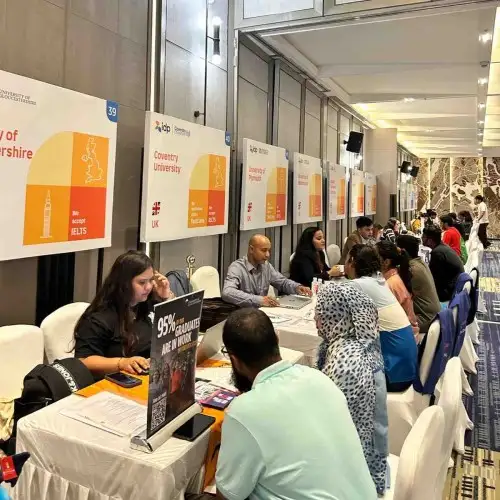

Every year, thousands of students in Jaipur dream about studying abroad. Some want to pursue an MBA in Canada, others want a master’s degree in Australia, while many students hope to build a career in countries like the UK, Ireland, New Zealand, or the United States.
The dream is exciting. The process, however, is often confusing.
Students have to choose the right country, shortlist universities, prepare documents, write a Statement of Purpose (SOP), clear English proficiency tests such as IELTS, understand visa requirements, and estimate the total cost of education. For first-time applicants, the amount of information available online can be overwhelming.
This is where study abroad consultants come into the picture.
Among the many overseas education consultants operating in Jaipur, IDP Education is one of the most recognized names. It has built a strong reputation over the years and is often one of the first organizations students come across when searching for IELTS registration, overseas admissions, or study abroad counselling.
But does a well-known brand automatically make it the best option?
Should students trust IDP Education Jaipur with such an important decision?
In this detailed review, we look at what IDP Education Jaipur offers, who can benefit from its services, where it performs well, and the factors students should consider before making a final decision.

| Factor | Rating |
|---|---|
| Counselling Quality | 4.8/5 |
| University Network | 4.9/5 |
| IELTS Support | 4.7/5 |
| Transparency | 4.8/5 |
| Value for Money | 4.9/5 |
| Overall Rating | 4.8/5 |
Best For: Students targeting Canada, Australia, UK, Ireland, USA, and New Zealand.
Not Ideal For: Students looking for Germany public universities, MBBS abroad, or non-English speaking destinations.
| Particulars | Details |
|---|---|
| Institute Name | IDP Education Jaipur |
| Category | Study Abroad Consultant |
| Main Services | Admissions, IELTS, Visa Guidance |
| Popular Countries | Canada, Australia, UK, USA, Ireland |
| Study Mode | Offline & Counselling |
| Suitable For | UG, PG & Study Abroad Aspirants |
Unlike many local consultancies that operate in only one city, IDP Education Jaipur is an international education services organization with a presence in multiple countries. It is widely known among students because of its involvement in IELTS and its extensive work in international student placement.
The Jaipur office serves students not only from the city itself but also from nearby areas across Rajasthan. Students from Kota, Ajmer, Udaipur, Alwar, Sikar, and Jodhpur often approach IDP for guidance related to overseas education opportunities.
One important thing to understand is that IDP is not a university and it is not a traditional coaching institute. Instead, it acts as a bridge between students and educational institutions abroad.
Its primary role is to help students understand their options, select suitable universities, complete applications, and navigate the admission process.
For students who are applying abroad for the first time, having someone guide them through the process can often reduce stress and prevent avoidable mistakes.
Address: Third Floor, International Business Centre, K-14, Ashok Marg, C Scheme, Ashok Nagar, Jaipur, Rajasthan 302001
Phone: 0141 441 1888
| Service | What Students Can Expect |
|---|---|
| Study Abroad Counselling | One-on-one guidance based on academic profile, budget, and career goals. |
| Course & University Selection | Help in shortlisting suitable universities and programs. |
| Application Assistance | Support with application forms, document submission, and tracking applications. |
| IELTS Support | IELTS registration, preparation guidance, and test-related assistance. |
| SOP & Document Guidance | Assistance with Statements of Purpose (SOPs), resumes, and supporting documents. |
| Scholarship Guidance | Information about scholarships and eligibility criteria. |
| Visa Assistance | Guidance on documentation and student visa application procedures. |
| Education Loan Guidance | Help in understanding education loan options and financing studies abroad. |
| Accommodation Support | Guidance regarding student housing and accommodation options. |
| Pre-Departure Support | Information on travel, insurance, banking, and settling into a new country. |
| Post-Offer Support | Assistance after receiving admission offers, including decision-making and next steps. |
IDP states that it provides counselling, university selection, application support, scholarship guidance, IELTS assistance, visa support, accommodation assistance, and pre-departure services for international students.
| Service | Typical Fee Information |
|---|---|
| Initial Counselling | Generally offered free of charge. |
| University Shortlisting | Usually included in counselling support. |
| Application Assistance | Often provided as part of IDP’s student services. |
| Visa Guidance | Usually included for students applying through IDP. |
| Scholarship Guidance | Generally available without a separate fee. |
| IELTS Registration | Paid separately as per official IELTS test fees. |
| IELTS Coaching / Preparation | May depend on the program or support package chosen. |
| Education Loan Processing | Charges, if any, depend on the lending institution, not IDP itself. |
IDP promotes free study abroad counselling and free guidance for students and parents through its offices in India.
| IELTS Test Type | Fee (Approx.) |
|---|---|
| IELTS Academic | ₹19,000 |
| IELTS General Training | ₹19,000 |
| IELTS UKVI Academic | ₹19,250 |
| IELTS UKVI General Training | ₹19,250 |
These are official IELTS fees listed for Jaipur test centres and may change in the future. Students should verify the latest fee before booking.
This is probably the most important question.
There are dozens of overseas education consultants in Jaipur. Some are small local agencies, while others have offices across India. So why do many students specifically consider IDP?
The answer lies in trust and structure.
Applying to universities abroad involves much more than filling out a form. Students need to understand eligibility requirements, gather documents, meet deadlines, and ensure that every detail is accurate.
A single missing document or incorrectly submitted application can create delays or even lead to rejection.
Many students and parents feel more comfortable working with an organization that has experience handling international admissions.
Another reason students choose IDP Education Jaipur is convenience. Instead of visiting multiple websites, comparing universities one by one, and trying to understand complicated admission processes, they can discuss their profile with a counsellor and receive guidance based on their goals.
Of course, students should not blindly follow any recommendation. The best results usually come when students actively participate in the decision-making process and ask questions about universities, fees, scholarships, and career opportunities.
One of the biggest misconceptions among students is that overseas consultants mainly focus on Canada and Australia.
While these countries remain popular destinations, they are not the only options available.
Students commonly explore opportunities in:
Canada continues to attract international students because of its high-quality education system, multicultural environment, and post-study work opportunities. Programs in business, technology, healthcare, and engineering are particularly popular.
Australia is known for its globally recognized universities, strong student support systems, and high standard of living. Many students choose Australia for undergraduate and postgraduate programs in business, IT, and health sciences.
The UK remains one of the world’s leading study destinations. A major advantage is that many master’s programs can be completed in one year, helping students save both time and money.
Ireland has become increasingly attractive for students interested in technology, finance, and pharmaceutical industries. The country is home to the European operations of several global companies.
Students looking for quality education in a relatively peaceful environment often consider New Zealand. It is particularly popular among students interested in agriculture, environmental sciences, and business-related programs.
The United States continues to be a dream destination for many students due to its research opportunities, university rankings, and program diversity.
The right country depends on factors such as budget, career goals, immigration preferences, and personal circumstances. There is no universal “best” destination.
Many students imagine that the first counselling session will be a sales presentation. In reality, the experience is usually more focused on understanding the student’s profile.
A typical counselling session may include discussions about:
The counsellor uses this information to suggest possible destinations and universities.
For example, a student planning to pursue a master’s degree in Data Science may receive a completely different set of recommendations than a student interested in Hospitality Management or Nursing.
Similarly, a student with a limited budget may be guided toward different options than someone willing to spend significantly more on tuition and living expenses.
This personalized approach is one of the reasons many students find professional counselling useful.
You May Also Like This: Top Study Abroad Consutants in Jaipur
Preparing a few important documents before your first counselling session can help the counsellor evaluate your profile more accurately and provide better recommendations.
Students should ideally carry:
Do not worry if you do not have every document ready. The purpose of the first counselling session is usually to understand your goals, evaluate your eligibility, and discuss potential study abroad pathways.
Having these documents available simply allows the counsellor to provide more personalized guidance.
Many students attend a study abroad counselling session without knowing what to ask. Preparing the right questions can help you understand your options, avoid costly mistakes, and create a realistic plan for your overseas education journey.
1. What is my total budget, including living expenses?
Tuition fees are only one part of the cost. Ask for a complete estimate that includes accommodation, food, transportation, health insurance, visa fees, and other miscellaneous expenses so you can plan your finances accurately.
2. Which universities match my academic profile?
Not every university is the right fit for every student. A counsellor can suggest universities based on your academic scores, English proficiency, career goals, and budget, helping you shortlist realistic options.
3. What IELTS or English proficiency score should I target?
Different universities and countries have different language requirements. Understanding your target score early gives you enough time to prepare and improve your chances of admission.
4. Are scholarships available for me?
Many students miss scholarship opportunities simply because they are unaware of them. Ask about merit-based, need-based, government-funded, and university-specific scholarships that can reduce your overall expenses.
5. What are my visa approval chances and possible risks?
A good counsellor should explain visa requirements honestly. Understanding potential risks, documentation requirements, and common reasons for visa rejection can help you prepare a stronger application.
6. What is the expected timeline for admissions and visa processing?
Studying abroad involves multiple steps, including test preparation, applications, offer letters, visa filing, and travel arrangements. Knowing the timeline helps you avoid last-minute stress and missed deadlines.
7. Which course has the best career prospects after graduation?
Course selection is just as important as university selection. Ask about industry demand, employment opportunities, salary expectations, and long-term career growth before making a decision.
8. Can I work part-time while studying?
Many international students rely on part-time work to manage living expenses. Understanding work-hour limits, minimum wages, and job availability in your destination country can help set realistic expectations.
9. What are the post-study work permit options?
Countries such as Canada, Australia, the UK, and Ireland offer post-study work opportunities. Ask how long you can stay after graduation and what pathways are available for gaining international work experience.
10. What support will I receive after admission?
The best study abroad consultants assist students beyond admissions. Ask whether they provide visa guidance, accommodation support, pre-departure assistance, education loan guidance, and post-arrival help.
💡 Did You Know? Many students start planning abroad only 4–6 months before intake, but 12–18 months is generally recommended.
Every student’s study abroad journey is unique. Academic background, budget, career goals, and preferred destination all influence the final decision. Here are two realistic examples of my students that show how study abroad pathways can differ.
Academic Background: 72% in B.Com
Goal: MBA from Australia
Budget: Medium to High
Preferred Intake: Next Academic Year
Pathway I Recommended to This Student:
This student has already completed a bachelor’s degree and wants to move into management and leadership roles. Since most Australian universities accept students with moderate academic scores, the focus would be on selecting universities that offer strong MBA programs and good post-study work opportunities.
The student may also need to demonstrate English proficiency through IELTS or an equivalent test. Depending on the university, some MBA programs may require work experience, while others offer early-career MBA options.
Key Priorities:
Possible Countries Considered:
🇦🇺 Australia, 🇮🇪 Ireland, 🇬🇧 UK
Academic Background: 85% in Class 12 (Science Stream)
Goal: Bachelor’s Degree in Computer Science
Budget: Medium
Preferred Intake: After Board Results
Pathway I Recommended to This Student:
Since this student is applying for undergraduate studies directly after Class 12, the admission process is very different from that of an MBA applicant. Academic performance in school becomes a major factor in university selection.
The student would need to shortlist universities or colleges offering Computer Science, prepare language test scores if required, and apply early because many Canadian institutions have limited seats for international students.
Key Priorities:
Possible Countries Considered:
🇨🇦 Canada, 🇦🇺 Australia, 🇳🇿 New Zealand
| Factor | MBA Student | Computer Science Student |
|---|---|---|
| Education Level | Postgraduate | Undergraduate |
| Current Qualification | B.Com Graduate | Class 12 Pass |
| Admission Focus | Graduation Score & Profile | Class 12 Marks |
| Course Duration | 1–2 Years | 3–4 Years |
| Work Experience | May Be Required | Not Required |
| Scholarship Opportunities | Professional & Merit-Based | Academic Merit-Based |
| Career Goal | Management Roles | Technology & IT Careers |
Many students assume there is a single study abroad process for everyone. In reality, the right country, university, course, budget, and visa strategy depend entirely on an individual’s profile. This is why professional counselling and personalized guidance are important before making any study abroad decision.
One of the most searched questions online is:
“Can I study abroad if my marks are average?”
The short answer is yes.
Many students mistakenly believe that overseas education is only for toppers. While some universities have highly competitive admission requirements, there are thousands of institutions around the world with varying eligibility criteria.
What matters is finding universities that match your profile.
A student with an average academic record may not gain admission to every university, but that does not mean international education is out of reach.
Good counselling involves helping students identify realistic options while still keeping long-term career goals in mind.
Students should also remember that universities often evaluate more than just marks. Factors such as work experience, English proficiency, SOP quality, recommendations, and overall profile strength can influence admission decisions.
Perhaps the biggest mistake students and parents make is focusing only on tuition fees.
When discussing overseas education, the conversation often begins with questions like:
“How much is the university fee?”
While tuition is important, it is only one part of the total cost.
A realistic budget should include:
| Expense Category | Examples |
|---|---|
| Tuition Fees | University charges |
| Accommodation | Hostel or rental expenses |
| Visa Costs | Application and processing fees |
| Health Insurance | Mandatory in many countries |
| Travel Costs | Airfare and initial travel |
| Living Expenses | Food, transport, utilities |
The total investment varies significantly depending on the country, city, and institution.
Students should discuss the complete financial picture before making a decision. Choosing a university solely because it has lower tuition fees may not always be the best long-term choice.
The goal should be to find the right balance between affordability, educational quality, and future career opportunities.
The total cost of studying abroad depends on factors such as the destination country, university ranking, course type, accommodation, and lifestyle. The table below gives a general idea of what students can expect.
| Estimated Budget | Typical Study Abroad Options |
|---|---|
| ₹10–20 Lakhs | Selected colleges in countries like Germany, Poland, Malaysia, and some public universities with lower tuition fees. |
| ₹20–35 Lakhs | Popular destinations such as Canada, Ireland, New Zealand, and several universities in the UK and Australia. |
| ₹35–50 Lakhs | Well-ranked universities, postgraduate programs, and premium institutions in major study destinations. |
| ₹50 Lakhs+ | Top-ranked global universities, specialized programs, and countries with higher tuition and living costs. |
Important: These figures are approximate and may vary depending on tuition fees, scholarships, accommodation choices, exchange rates, and personal expenses.
Yes. Many students assume studying abroad requires ₹40–50 lakhs or more, but countries such as Germany, Poland, Hungary, and Malaysia offer quality education at comparatively affordable costs. Scholarships, part-time work opportunities, and careful financial planning can significantly reduce the overall expense.
One of the most common questions students ask is whether they need to pay for study abroad counselling.
In many cases, students can receive initial counselling, university shortlisting, and application guidance without paying a separate counselling fee. This is one reason why organizations such as IDP Education Jaipur are popular among students exploring overseas education opportunities.
However, students should always ask for clarity regarding any costs associated with additional services, test preparation, document verification, courier charges, or other optional support services.
The best approach is to discuss all potential costs during your first counselling session so there are no surprises later in the process.
Remember: Whether a consultant charges a fee or not should not be the only deciding factor. The quality of guidance, transparency, responsiveness, and suitability of university recommendations are often more important than the counselling fee itself.
One of the biggest misconceptions about studying abroad is that it is only for students with very high budgets. In reality, international education options are available across different budget ranges. The right destination, university, and course depend largely on your financial situation and long-term goals.
If your family has a limited budget, studying abroad may still be possible. During counselling, students can explore countries, universities, and colleges that offer comparatively affordable tuition fees, lower living costs, and scholarship opportunities.
Students in this category should focus on:
Students with a moderate budget often have the widest range of options. Depending on their academic profile, they may be able to choose from multiple countries, institutions, and course levels.
Students in this category should focus on:
Students with a higher budget may have access to a broader range of universities and destinations. However, higher spending does not automatically guarantee better outcomes.
Students in this category should focus on:
During counselling, I generally advise students not to choose a country solely because it is popular or because a friend has gone there. The better approach is to start with your budget, academic profile, and career goals, and then identify universities that fit those requirements.
A well-planned study abroad journey is not about spending the most money. It is about finding the right balance between affordability, education quality, career opportunities, and future growth.
Another common question students ask is whether consultants can help them secure scholarships.
The answer is yes – but with an important clarification.
No consultant can guarantee a scholarship.
Scholarships are awarded by universities, governments, and other organizations based on specific eligibility criteria.
However, counsellors can help students identify available opportunities, understand requirements, and submit applications correctly.
Students with strong academic records, leadership experience, extracurricular achievements, or relevant work experience may have access to more scholarship opportunities.
At the same time, students should avoid choosing a university solely because a scholarship is available. The quality of the program and long-term career value should remain the primary considerations.
For many students, IELTS is the first major milestone in the study abroad journey.
A strong IELTS score can open doors to more universities and programs, while a weaker score may limit available options.
This is one area where IDP Education Jaipur is particularly well-known.
Many students approach the organization for IELTS registration and exam-related support. Depending on the services available at the time, students may also gain access to preparation resources, practice materials, and guidance regarding the test format.
However, students should understand that IELTS preparation and IELTS coaching are not necessarily the same thing.
Those seeking intensive classroom training may still wish to compare specialized IELTS coaching institutes in Jaipur before making a decision.
No study abroad consultant can legally guarantee admission to a university or visa approval.
University admissions are decided by the institution based on academic qualifications, eligibility criteria, supporting documents, and application quality. Similarly, student visas are approved or rejected by the immigration authorities of the destination country.
A consultant’s role is to help students prepare stronger applications, submit accurate documentation, avoid common mistakes, and understand visa requirements. These services can improve the overall application process, but the final decision always rests with the university and visa authorities.
Students should be cautious if any consultant promises guaranteed admissions or guaranteed visas, as such claims can be misleading.
A trustworthy consultant focuses on improving your chances of success rather than making unrealistic promises.
Many students assume that once they choose a university, the hard part is over.
In reality, selecting a university is only the beginning.
The application process usually involves several stages, including document collection, application submission, offer letter review, financial planning, visa preparation, and pre-departure arrangements.
A typical overseas admission journey may look something like this:
Students often underestimate the importance of documentation. Academic transcripts, passports, English proficiency scores, Statements of Purpose, recommendation letters, and financial documents all play an important role.
A small error can create unnecessary delays, which is why many students prefer guidance throughout the process.
1. Career Counselling
Identify the right country, course, and university based on your academic background, budget, and career goals.
⬇️
2. IELTS/PTE Preparation
Most universities require proof of English proficiency. Students usually prepare for IELTS, PTE, or TOEFL.
⬇️
3. University Selection
Shortlist universities based on rankings, tuition fees, scholarships, and admission requirements.
⬇️
4. Application Submission
Submit academic documents, SOP, LORs, language test scores, and application forms.
⬇️
5. Offer Letter
Receive conditional or unconditional admission offers from universities.
⬇️
6. Visa Application
Prepare financial documents, biometrics, medical tests, and visa applications.
⬇️
7. Accommodation Arrangement
Book university housing, private accommodation, or student residences before departure.
⬇️
8. Departure & Pre-Departure Support
Attend orientation sessions, arrange travel, and prepare for life in the new country.
After speaking with students over the years, one thing becomes clear: many application problems are preventable.
One of the most common mistakes is choosing a university based solely on rankings. A highly ranked university may look impressive, but it may not be the best fit for every student. Program quality, tuition fees, location, industry connections, and career opportunities should also be considered.
Another common mistake is ignoring the total cost of education. Students sometimes focus on tuition fees while overlooking accommodation, transportation, insurance, and daily living expenses.
Many students also delay their applications unnecessarily. Waiting until the last minute reduces available options and increases stress during the admission cycle.
Poorly written Statements of Purpose can also weaken otherwise strong applications. Universities want to understand why a student has selected a particular course and how it aligns with future goals.
Finally, some students believe that a consultant can guarantee admission or a visa. No consultant, university, or organization can honestly make such a promise. Final decisions are always made by universities and immigration authorities.
Many students begin planning only a few months before their intended intake. In reality, the most successful applicants often start their preparation much earlier.
A good rule of thumb is to begin planning approximately 12 to 18 months before your target intake.
A typical timeline may include:
Starting early gives students more university options, more scholarship opportunities, and less stress throughout the process.
Students who plan early often make better decisions because they have enough time to compare universities, improve test scores, and prepare stronger applications.
Choosing a study abroad consultant is an important decision that can influence your university selection, visa application, and overall study abroad experience. While most consultants highlight their success stories and university partnerships, there are several factors students should understand before making a choice.
1. Not Every Consultant Works with Every University
Many students assume a consultant can help them apply to any university in the world. In reality, most consultants have partnerships with specific institutions. Before proceeding, ask whether the universities you are interested in are part of their network.
2. A Good Consultant Should Explain Both Pros and Cons
If a counsellor only talks about the advantages of a particular country, university, or course, you should ask more questions. A trustworthy consultant discusses challenges, costs, visa requirements, and potential risks as well.
3. The Cheapest Option Is Not Always the Best Option
Students often focus on finding the lowest tuition fees. However, factors such as course quality, graduate employment rates, internship opportunities, and post-study work options can be equally important.
4. University Rankings Should Not Be the Only Decision Factor
A university’s ranking is only one part of the picture. Course curriculum, industry connections, campus location, class size, and support services may have a greater impact on your student experience and career outcomes.
5. Scholarships Are Not Guaranteed
Many students expect to receive a scholarship automatically. In reality, scholarships are competitive and often depend on academic performance, extracurricular achievements, and university-specific criteria.
6. Visa Approval Is Never Guaranteed
Even if you receive an admission offer, visa approval ultimately depends on immigration authorities. Financial documentation, academic history, genuine study intentions, and compliance with visa requirements all matter.
7. Part-Time Jobs Should Be Seen as Support, Not a Funding Plan
While many students work part-time abroad, earnings may not cover all expenses. Accommodation, transportation, and daily living costs can vary significantly depending on the city and country.
8. The Best Country Depends on the Student
There is no single “best” destination for everyone. The right choice depends on your academic profile, career goals, budget, preferred course, and long-term plans.
9. Ask How the Consultant Supports You After Admission
The admission letter is only one step in the process. Students should ask whether the consultant also assists with visa documentation, accommodation guidance, education loans, pre-departure briefings, and travel planning.
10. You Should Never Feel Pressured to Make an Immediate Decision
A professional counsellor provides information and guidance, but the final decision should always belong to the student and family. Take time to compare options, review costs, and understand your choices before committing.
No education consultant receives perfect reviews, and students should always be cautious of any organization that appears flawless.
However, when you look at common feedback patterns, certain themes emerge.
Many students appreciate the structured nature of the counselling process. They often mention that the admission journey feels more organized when documentation, applications, and communication are handled systematically.
Students also tend to value access to information regarding universities, application procedures, and study destinations.
Another commonly mentioned advantage is that students can receive support across multiple stages of the process rather than dealing with separate agencies for admissions, IELTS-related requirements, and visa guidance.
At the same time, some students report longer waiting periods during peak admission seasons. This is not unique to IDP. Popular consultants often experience higher demand around major intake periods when large numbers of students submit applications simultaneously.
The best approach is to read reviews from multiple sources, attend a counselling session, and decide whether the experience matches your expectations.
Many students find themselves choosing between a well-known organization such as IDP and a smaller local consultancy.
Both options have advantages.
Smaller consultancies may sometimes provide more personalized attention because they handle fewer students. Some students prefer this approach and feel more comfortable building a close relationship with a counsellor.
Larger organizations often offer more structured systems, wider university networks, standardized processes, and access to a larger support team.
The decision ultimately depends on what matters most to you.
If you value organization, established systems, and an internationally recognized brand, a larger organization may feel more reassuring.
If personal attention is your highest priority, you may also want to compare local alternatives before making a final decision.
The important thing is not to choose based solely on advertising. Compare the quality of guidance, transparency, responsiveness, and overall professionalism.
1. Global Reputation
IDP is one of the largest and most recognized study abroad organizations, with offices in multiple countries and decades of experience in international education.
2. Official IELTS Co-Owner
IDP is one of the co-owners of the IELTS exam, which gives students direct access to IELTS registration, test preparation resources, and guidance.
3. Free Counselling Services
Most counselling services are offered free of charge, making it easier for students to get admission guidance without paying consultation fees.
4. Strong University Network
IDP works with a large number of universities and colleges across countries such as Australia, Canada, United Kingdom, Ireland, New Zealand, and the United States.
5. End-to-End Support
Students can usually receive help with university applications, offer letters, visa documentation, education loans, accommodation guidance, and pre-departure support.
6. Multiple Office Locations
Having physical offices in many cities allows students and parents to attend face-to-face counselling sessions if needed.
1. Counsellor Quality Can Vary
The quality of guidance often depends on the individual counsellor and office. Some students report excellent experiences, while others feel their counselling was generic.
2. Limited to Partner Universities
Like many large study abroad consultants, counsellors may primarily recommend institutions within their partner network. This doesn’t necessarily mean the universities are poor, but students should still research alternatives independently.
3. Less Personalized for Complex Cases
Because IDP handles a high volume of applications, students with unusual academic backgrounds, low scores, education gaps, or complicated visa situations may sometimes require more specialized attention.
4. Popular Universities Receive Most Attention
Students may find that counsellors initially suggest commonly chosen universities and courses before exploring more niche or specialized options.
5. Different Experiences Across Branches
Service quality, response time, and follow-up support can vary significantly between offices and counsellors.
IDP may be a good fit for students who want a structured and professional approach to overseas education.
Students who are applying abroad for the first time often benefit from having guidance throughout the process.
It may also suit students interested in major English-speaking destinations such as Canada, Australia, the UK, Ireland, New Zealand, and the United States.
Those who prefer dealing with an internationally recognized organization rather than a small local agency may also feel more comfortable with IDP.
Not every student has identical requirements.
Students looking for highly specialized destinations may wish to compare multiple consultants before making a decision.
Similarly, students who want intensive classroom-based IELTS preparation may also evaluate dedicated IELTS coaching institutes alongside overseas education consultants.
Exploring alternatives does not mean avoiding IDP. It simply ensures that students make an informed decision based on their specific goals.
While study abroad consultants can be valuable for many students, not everyone necessarily requires professional counselling.
Some students may be comfortable researching universities independently, understanding admission requirements, preparing applications, and communicating directly with universities.
You may be able to manage the process on your own if:
However, students with multiple university options, complex academic backgrounds, education gaps, visa concerns, or limited knowledge of the admission process often benefit from professional guidance.
The decision should depend on your confidence level, available time, and familiarity with the study abroad process. A consultant can simplify the journey, but students should remain actively involved in every major decision.
After evaluating its services, student feedback, reputation, and overall approach, IDP Education Jaipur remains one of the strongest overseas education consultancy options available in Rajasthan.
Its biggest strength is not aggressive marketing or flashy promises. Instead, it is the structured support system that helps students navigate a complex process with greater confidence.
The organization appears most suitable for students who want guidance throughout the application journey and value working with an established name in international education.
At the same time, students should remember that the success of any overseas education plan ultimately depends on informed decision-making, realistic expectations, and active participation in the process.
No consultant can replace a student’s own research and commitment.
| Category | Score |
|---|
| Counselling | 9/10 |
| Transparency | 9/10 |
| University Options | 10/10 |
| Student Support | 9/10 |
| Overall | 9.2/10 |
Studying abroad is one of the most important educational decisions a student can make. It involves significant financial investment, careful planning, and long-term career considerations.
Choosing the right consultant cannot guarantee success, but it can make the journey more organized and less stressful.
IDP Education Jaipur has built a reputation as a trusted overseas education consultant by helping students understand their options, prepare applications, and navigate various stages of the admission process.
For students planning to study in major international destinations and looking for structured guidance, IDP deserves serious consideration.
The smartest approach is simple: attend a counselling session, ask questions, compare options, and choose the path that aligns best with your goals, budget, and career plans.
Is IDP Education Jaipur genuine?
Yes, IDP is a well-known international education services organization with a long-standing presence in the overseas education sector.
Does IDP Jaipur charge counselling fees?
Many counselling services for partner institutions are often provided without a separate counselling fee. Students should verify current policies directly with the office.
Can IDP help with university admissions abroad?
Yes. Students can receive guidance related to university selection, applications, documentation, and various stages of the admission process.
Which countries can students apply to through IDP?
Students commonly explore opportunities in Canada, Australia, the United Kingdom, Ireland, New Zealand, and the United States.
Does IDP provide IELTS support?
Students can access IELTS-related services and information. Availability of preparation resources may vary.
Can students with average marks study abroad through IDP?
Yes. Many universities accept students with different academic backgrounds. Suitable university selection is an important factor.
Can IDP guarantee admission?
No. Admission decisions are made by universities based on their eligibility criteria.
Can IDP guarantee a visa?
No consultant can guarantee visa approval because final decisions are made by immigration authorities.
How early should students start planning to study abroad?
Starting preparations 8 to 12 months before the intended intake is generally advisable.
Is IDP better than every other consultant in Jaipur?
Not necessarily. The right consultant depends on individual needs, preferred destinations, budget, and expectations. Comparing multiple options before making a decision is always a good idea.
Similar Institute: